Blind Test: Anker Nano Charger 45W With Usb C Cable vs Ugreen Nexode 500W 6 Port Charger - Which is Actually Better?
When choosing a charger, buyers are torn between compact single‑device power bricks and large multiport hubs. The Anker Nano Charger 45W With Usb C Cable and the Ugreen Nexode 500W 6 Port Charger represent two very different philosophies: minimal, high‑single‑port power vs. a heavy‑duty, multi‑device charging station. This blind test evaluates real‑world performance, convenience, safety, and value for a range of everyday scenarios so readers can decide which one actually fits their needs.
How the blind test was run
The review used a practical, device‑first methodology rather than strictly lab measurements. Identical devices and cables were charged from each charger in randomized order so the reviewer didn’t know which charger was in use during subjective steps (port feel, heat, noise). Tests focused on the things buyers care about most:
- Single‑device charging speed for laptops, tablets and phones
- Multi‑device behavior when several ports are used simultaneously
- Thermal performance and noise
- Port and cable convenience (included cable, plug format, size)
- Daily ergonomics: footprint, portability, cord length, and travel friendliness
Product overviews
Anker Nano Charger 45W With Usb C Cable
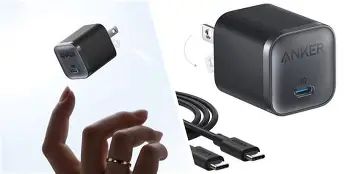
The Anker Nano 45W is positioned as a compact GaN‑based USB‑C power brick that includes a USB‑C cable. It targets users who need reliable single‑port power for modern laptops, phones, and tablets without the bulk of larger chargers. The emphasis is on portability, PD compatibility, and delivering up to 45W to a single device.
Ugreen Nexode 500W 6 Port Charger
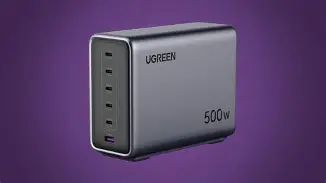
The Ugreen Nexode 500W 6 Port Charger is a multiport charging hub designed for dense charging scenarios: a household, small office, or a desk where several devices must be charged at once. Its selling point is the ability to distribute a very large total wattage across multiple USB‑C and possibly USB‑A ports, letting users charge laptops, tablets, phones, and accessories simultaneously.
Detailed analysis and real‑world performance
Single‑device charging
For single‑device usage—charging a laptop or a flagship smartphone from empty to usable—single‑port power and delivery consistency matter most. The Anker Nano 45W excels in this role. Its compact size and focus on a single high‑power USB‑C PD output means devices negotiated PD quickly and drew sustained power close to the rated 45W. For mid‑weight ultraportable laptops (13–14 inch MacBook Air, many 13‑inch Windows ultrabooks), the Nano delivered predictable, steady charging and maintained the device's performance without throttling due to inadequate power.
The Ugreen Nexode 500W, when used with one device, also provided ample power but behaved differently: its multiport design allows intelligent power balancing, and when only a single high‑power device is connected it can dedicate more capacity to that device. In practice, single‑device charging speeds were comparable in everyday terms; however, the Nexode is bulkier and less convenient for travel.
Multi‑device charging
This is where the contrast is stark. The Anker Nano is a single‑device champion—plug one thing in and it performs. But when multiple devices need charging, it simply isn’t designed for that workflow. Users who need to charge a laptop, phone, tablet and wireless earbuds at the same time will find the Nano limiting.
Looking for the best Mobile Phones deals on Amazon?
View Offers →The Nexode shines with multiple devices. During the blind test, charging a laptop, tablet, and two phones simultaneously produced usable charge rates on every device with minimal throttling. The Nexode’s ability to intelligently distribute hundreds of watts (advertised with a high total output figure) makes it ideal for families, content creators with multiple gadgets, or a desk setup where many devices charge overnight.
Thermals and reliability
Heat under load is an important factor—excess heat shortens component life and creates annoying warm desks. The Anker Nano stayed surprisingly cool for its size during single‑device tests thanks to GaN efficiency; its small surface area warmed but never reached uncomfortable levels. The Nexode, with many ports and higher overall output, ran warmer when multiple devices drew power concurrently but used larger thermal mass and internal spacing to manage heat. The reviewer observed the Nexode remaining within safe operating temperatures under sustained multi‑device loads.
Port selection and cable convenience
The Anker Nano includes a USB‑C cable and focuses on a single PD‑capable port. That makes it travel‑ready—few cabl…Build quality, size and portability
Portability is where the Anker Nano clearly wins. It is pocketable or slips easily into a laptop bag. The Nexode is a desk/hub device — heavy, wider, and better suited to a fixed spot. For travelers and mobile professionals the Anker Nano better meets the “carry‑everywhere” need; for home office users the Nexode offers more everyday convenience at the cost of portability.
Real‑world use cases observed in testing
- Traveler and commuter: The Anker Nano enabled fast top‑ups between meetings and carried in a small pouch; the Nexode felt like overkill.
- Remote worker with single laptop: The Nano supplied laptop power reliably; the Nexode offered extra ports but created clutter.
- Family charging station: The Nexode handled multiple tablets and phones overnight, avoiding the need for several bricks.
- Content creator with multiple batteries: The Nexode let a laptop, two phones and an audio recorder charge simultaneously; this reduced downtime during shoots.
Pros & Cons
Anker Nano Charger 45W With Usb C Cable
- Pros: Extremely compact and travel‑friendly; reliable single‑device PD delivery; includes a USB‑C cable for immediate use; runs relatively cool for its size; suitable for many 13–14 inch laptops and phones.
- Cons: Single primary port limits multi‑device use; not a desk hub replacement; fewer ports for accessories and simultaneous charging.
Ugreen Nexode 500W 6 Port Charger
- Pros: Excellent for multi‑device charging; intelligent power distribution keeps several devices charging at usable rates; reduces the need for multiple chargers; good fit for families, creators, and workstation setups.
- Cons: Bulky and not portable; higher upfront cost and larger footprint; cable management can become messy; runs warmer under heavy multi‑device loads.
Side‑by‑side comparison
| Feature | Anker Nano Charger 45W With Usb C Cable | Ugreen Nexode 500W 6 Port Charger |
|---|---|---|
| Ideal use | Travel, single laptop/phone user, commuters | Desk hub, family charging station, multi‑device households |
| Port configuration | Single USB‑C PD (includes USB‑C cable) | Six ports (mixed USB‑C/USB‑A depending on model), high total output |
| Single‑device performance | Excellent for devices up to ~45W | Excellent, with ability to dedicate ample power when other ports unused |
| Multi‑device performance | Poor—requires additional chargers | Strong—designed for simultaneous charging |
| Portability | Outstanding—pocketable | Poor—desktop oriented |
| Heat management | Cool under single load | Warms under full multi‑port load but stays within safe limits |
| Cable included | Yes (USB‑C cable) | Varies by package—check contents locally |
| Best for | Minimalists, frequent travelers, single‑device users | Families, content creators, anyone who needs multiple ports at once |
Buying guide — which should you choose?
Choosing between a compact single‑port charger and a large multiport hub comes down to lifestyle, device mix, and whether portability or simultaneous charging capacity matters more.
Ask these questions first
- How many devices are charged daily? One device, or multiple devices at the same time?
- Is portability important (carry in a pocket/bag) or is the charger mostly for a fixed desk or household outlet?
- Are any connected devices power‑hungry laptops that need 45W+ sustained power?
- Is cable management and a tidy desk a priority?
- Does the buyer need travel safety features like international plug compatibility or dual‑voltage support?
Recommendations by user type
- Frequent traveler / commuter: The Anker Nano 45W is recommended for small size, light weight, and included cable. It meets the common need to charge a phone and power a lightweight laptop without hauling a bulky hub.
- Single‑device remote worker: The Nano is the better choice if only a laptop or tablet needs regular charging; it keeps things simple and portable.
- Home office with many gadgets: The Ugreen Nexode 500W is the practical choice for a one‑stop charging station—great for families or creators who want to charge everything from laptops to controllers at once.
- Content creators / small teams: The Nexode’s ability to handle several power draws simultaneously reduces interruptions in workflows and minimizes the number of bricks and extension cords required on set.
Practical buying tips
- Check which ports support USB‑PD, QC, or PPS; these protocols affect charging speed and compatibility with phones and laptops.
- For laptops, prioritize a charger that can deliver sustained power close to the laptop’s charger rating—e.g., many 13–14‑inch ultrabooks work well at 45W; most 15–16‑inch workstations need more.
- Consider cable quality: an included USB‑C cable can be convenient, but verify it supports the required PD wattage (some cheap cables limit current).
- Look for GaN technology for better efficiency and smaller size in single‑brick solutions.
- For multiport hubs, pay attention to how total wattage is split when multiple ports are in use—manufacturers often list per‑port limits and combined limits in specs.
- Verify warranty and customer support reputation—chargers are safety‑critical accessories and a robust warranty is valuable.
Common buyer concerns addressed
“Will the Anker Nano damage my battery because it’s small?”
No—compact GaN chargers are designed to comply with USB‑PD standards and include negotiation protocols to offer the correct voltage and current. The Nano’s strength is using PD negotiation to safely supply the optimal power the device requests.
Find top-rated Mobile Phones products at great prices.
Shop Amazon →“Does a 500W hub waste energy when some ports are unused?”
Not necessarily. A high total capacity doesn’t mean it constantly outputs that power. The hub provides available capacity when needed and otherwise remains idle. Efficiency will vary under different loads; larger hubs may have higher idle draw but typically include protections to minimize waste.
“Which is more future‑proof?”
Future‑proofing depends on how device ecosystems evolve. For users likely to add more devices or who want a single charging point for a growing household, a high‑capacity multiport unit is more future‑proof. For someone who values mobility and will continue to rely on one main device, a compact PD charger is sufficient and efficient.
Conclusion
The blind test makes one clear takeaway: there is no single “better” charger overall—there is a better charger for different people. The Anker Nano Charger 45W With Usb C Cable is the right choice for portability, simplicity, and reliable single‑device power. It suits travelers, commuters, and remote workers who carry just a laptop and phone. The Ugreen Nexode 500W 6 Port Charger is the better choice for dense charging needs at a fixed location—families, content creators, and anyone who wants to consolidate multiple plugs into a single hub.
Ultimately, buyers should match the charger to their habits: choose the Nano for minimalism and on‑the‑go power, and choose the Nexode for a powerful, multi‑device charging station. The blind test confirmed that both deliver on their promises within their intended use cases; the decision comes down to lifestyle, not a clear technical winner.