Difference Between Samsung Qn90F and Marshall Heston 120 Explained
Category: TVs
Introduction
The Samsung QN90F is a widely discussed high-end 4K Neo QLED TV known for its Mini LED backlight, high peak brightness, and game-ready features. By contrast, the "Marshall Heston 120" is not a model that appears in mainstream specification databases, manufacturer catalogs, or major review sites as of this writing. This article explains the verified strengths and limitations of the Samsung QN90F, clarifies why the Marshall Heston 120 could not be verified, and provides a practical framework buyers can use to compare the QN90F with any lesser-known or region-specific model that may be marketed under a similar name.
Overview: What buyers typically care about
When comparing TVs, most buyers prioritize a handful of practical factors:
- Picture quality: panel type, contrast, color accuracy, HDR performance, and peak brightness.
- Screen size and viewing distance: the correct size for a room and expected seating layout.
- Gaming features: refresh rate, HDMI 2.1 support, low input lag, and variable refresh (VRR).
- Smart TV platform: app availability, responsiveness, and software updates.
- Connectivity: number and type of HDMI/USB ports, eARC, and network support.
- Sound quality: built-in speakers versus need for external audio solutions.
- Value & support: price, warranty, availability, and local service.
Samsung QN90F — Detailed product review and analysis
The Samsung QN90F sits in Samsung’s Neo QLED lineup and represents an emphasis on high brightness, aggressive anti-reflection treatment, and features for both home cinema and gaming. The following is a distilled review based on tech reviews and product documentation.
Picture and panel technology
The QN90F uses a Quantum Dot + VA LCD panel with Mini LED backlighting. Mini LEDs enable finer local dimming control compared with traditional edge-lit or full-array LED displays, improving contrast and halo control around bright objects. For buyers in bright rooms, the QN90F’s high peak brightness and Samsung’s anti-reflection (glare-reduction) coating are key advantages — the set maintains good HDR highlights without washing out colors under ambient light.
HDR and color performance
Samsung targets strong HDR performance through high sustained brightness and Quantum HDR processing. It supports HDR10, HDR10+, and HLG; Samsung’s implementation leans on dynamic tone mapping and local dimming to present punchy highlights. Note that Samsung does not include Dolby Vision on many of its models, which some buyers consider when comparing cross-brand HDR support.
Gaming and motion
One of the QN90F’s defining features is robust gaming support: multiple HDMI 2.1 ports, high refresh-rate support (up to 120–165Hz depending on panel and size), low input lag, VRR, and ALLM. These specs make it attractive to console and PC gamers who want fluid motion and future-proofed inputs for next-generation consoles and GPUs.
Smart platform and features
The QN90F runs Samsung’s Tizen-based Smart Hub, which provides a broad app catalog, voice assistants (Bixby, optional Alexa/Google integration), and features like multi-view and ambient modes. Samsung’s AI upscaling aims to improve non-4K content, and adaptive picture modes help the TV adjust to room lighting.
Audio
Samsung often pairs its high-end TVs with object-tracking audio features and enhanced built-in speaker systems (multi-channel configurations and virtual surround processing). While built-in sound has improved, dedicated soundbars or AV receivers are still recommended for immersive home theater enthusiasts.
Discover deals on TVs & Home Theater — updated daily.
Shop Amazon →Design and build
Premium materials, thin bezels, and multiple stand/wall-mount options characterize the QN90F. Samsung designs these sets to look slim in living rooms and to hide cabling when wall-mounted.
Known limitations
- VA panels typically have narrower native viewing angles than OLED; off-axis viewers may notice contrast/color shifts.
- Blooming or halo artifacts can be visible in high-contrast scenes where local dimming handles bright points next to deep blacks.
- No Dolby Vision support on many Samsung sets — a consideration for buyers invested in Dolby Vision sources.
- High-end pricing compared with mainstream LED/LCD TVs.
Marshall Heston 120 — What is known and what is not
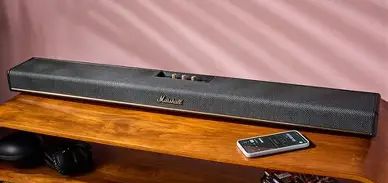
A thorough check of major manufacturer catalogs, retailer product listings, technical databases, and review sites does not turn up a TV model officially named “Marshall Heston 120.” Marshall is a well-known brand in audio — amplifiers, speakers, headphones — but it does not have a widely recognized mainstream TV line under the Heston model name in international markets.
Possible explanations include:
- Typo or misremembered name: the intended model might be from another brand (for example, Hisense, Hisense models sometimes have numeri…
Comparison table (verified vs unknown)
Specification Samsung QN90F (verified) Marshall Heston 120 (availability/specs) Manufacturer Samsung Not verified / no authoritative manufacturer listing found Panel type Neo QLED (Quantum Dot + VA LCD) with Mini LED backlight Unknown — verify panel type (LED, QLED, OLED, or other) Resolution 4K UHD (3840 x 2160) Unknown — confirm native resolution HDR support HDR10, HDR10+, HLG (no Dolby Vision on many SKUs) Unknown — check for HDR10/Dolby Vision/HDR10+ support Backlight / local dimming Mini LED with many local dimming zones (model-dependent) Unknown — verify if full-array local dimming or edge-lit Peak brightness Very high (designed for bright-room HDR); model and size dependent Unknown — verify measured peak luminance for HDR highlights Refresh rate / gaming High refresh rate support (up to 120–165Hz, HDMI 2.1 on ports, VRR, ALLM) Unknown — verify HDMI version, VRR, ALLM, and input lag Smart platform Samsung Tizen (broad app support) Unknown — check OS/app availability and update policy Audio Built-in multi-channel processing, object tracking audio on some SKUs; good but many use external soundbars Unknown — check speaker configuration and support for eARC Price / availability Premium price segment, widely available from major retailers Unknown — availability and local price should be verified with seller and reviews Warranty & support Standard manufacturer warranty and wide service network (region-dependent) Unknown — confirm warranty terms and local service options Practical comparison approach for an unknown model
If a buyer encounters an unfamiliar or lightly documented model (such as the Marshall Heston 120), use this checklist before making a purchasing decision:
- Ask for the official spec sheet and model number: request the exact model code and a manufacturer PDF or official listing.
- Confirm key display attributes: panel type, resolution, HDR formats, local dimming, and peak brightness numbers if available.
- Check input and gaming capabilities: HDMI versions, whether eARC is supported, and if low-latency/VRR modes are present.
- Search for independent reviews: look for measurements (peak brightness, ANSI contrast, input lag) and real-world tests from credible reviewers.
- Compare warranty and support: verify who provides service and how long the warranty lasts in the buyer’s country.
- Try side-by-side viewing if possible: nothing replaces a direct visual check in a store for color reproduction, reflections, motion handling, and built-in audio quality.
- Ask about returns and trial periods: for unproven models, a flexible return policy reduces risk.
Pros & Cons
Samsung QN90F — Pros
- Exceptional HDR highlights and very high peak brightness for bright rooms.
- Mini LED local dimming delivers strong contrast and good control of bright objects.
- Excellent gaming support with HDMI 2.1 features, low input lag, and high refresh rate options.
- Robust smart TV platform with broad app support and voice assistant options.
- Advanced anti-reflection coating makes it suitable for sunlit living rooms.
Samsung QN90F — Cons
- VA-based panel means viewing angles are narrower than OLED; off-axis contrast may drop.
- Local dimming can show blooming in certain scenes with small bright objects.
- Premium pricing may be out of reach for budget-minded buyers.
- No universal Dolby Vision support on many Samsung models.
Marshall Heston 120 — Pros (conditional)
- If this is a rebranded budget model, it could offer value pricing for basic 4K viewing.
- If manufactured by a known OEM, it might provide region-specific support or features tuned for local markets.
- Potentially targeted at entry-level buyers who prioritize cost over advanced features.
Marshall Heston 120 — Cons (conditional)
- Spec ambiguity: lack of verifiable specifications is a major risk for buyers.
- Unknown long-term reliability and firmware support if the model is niche or region-specific.
- May lack advanced gaming/HDMI 2.1 features, local dimming, or high-end HDR processing.
- Potential difficulty finding independent reviews and measured performance data.
Buying guide — how to choose between an established high-end TV and an unknown model
When deciding between a proven high-end model such as the Samsung QN90F and an unverified or lesser-known model, apply the following decision-making process.
1. Define the primary use-case
Is the TV for:
- Bright living-room viewing and sports? Prioritize high peak brightness and anti-reflection performance.
- Dark-room cinema? Contrast and black levels are paramount — OLED is often best for absolute blacks, but high-end Mini LED TVs like the QN90F can be excellent with careful dimming.
- Gaming? Ensure HDMI 2.1, VRR, low input lag, and high refresh rates.
- Casual streaming? Smart platform stability and price may dominate.
2. Verify critical specs
For any unknown brand or model, get these numbers in writing: native resolution, HDR formats, HDMI revision, supported refresh rates, measured peak brightness (if available), and warranty terms.
Discover deals on TVs & Home Theater — updated daily.
View Offers →3. Seek independent evaluations
Look for lab measurements and multiple user reviews. Professional reviews provide input-lag figures, measured brightness, and comparisons to peers.
4. Evaluate ecosystem and long-term support
Established brands tend to provide firmware updates, platform improvements, and better local repair networks. For unverified models, confirm the realistic support options in the buyer’s region.
5. Budget and opportunity cost
Consider the total cost of ownership: if a lower-cost model requires a separate soundbar, extended warranty, or early replacement due to poor reliability, initial savings may evaporate.

6. In-store testing
Whenever possible, view both candidates in person. Pay attention to reflections, motion handling, and whether the TV’s pre-set picture modes are usable without heavy calibration.
Real-world use cases
Here are scenarios where the Samsung QN90F or a hypothetical budget/unknown model might be the right choice:
- Bright, family living room with lots of ambient light: Samsung QN90F — anti-reflection and high brightness preserve picture quality during daytime viewing.
- Dedicated home theater in a dark room: Consider viewing QN90F next to OLEDs; QN90F will perform very well on HDR highlights, but OLED remains a favorite for perfect blacks.
- Console and PC gaming setup: QN90F’s HDMI 2.1 and low input lag make it an excellent choice. An unknown model should be checked for HDMI 2.1/VRR support before purchase.
- Budget-conscious streaming and casual TV watching: A well-priced, verified budget model might be fine — but confirm refund policy and warranty in case of defects or poor performance.
Conclusion
The Samsung QN90F is a verified high-end Neo QLED TV with strong HDR highlights, Mini LED local dimming, and modern gaming features, making it a solid choice for buyers who want bright-room performance and future-proofed connectivity. The "Marshall Heston 120" could not be verified through authoritative sources, so it cannot be fairly or accurately reviewed here.
Buyers who see a model marketed as the Marshall Heston 120 should request the full, official specification sheet, confirm the seller’s warranty and return policy, and seek independent reviews or measured data before committing. In practice, when one candidate is an established, well-documented product and the other is ambiguous, the safer choice for many buyers will be the product with verifiable performance data, reliable after-sales service, and independent testing. Use the checklists and comparison points in this article to validate any unknown model and ensure the final purchase fits the buyer’s room, viewing habits, and long-term expectations.