Why Everyone is Buying the Honeywell Home X2S Smart Thermostat (Full Review)
I've been using the Honeywell Home X2S Smart Thermostat for several months in my own home, and I wanted to share a thorough, honest take from the perspective of someone who installed it, lived with it through different seasons, and relied on it for everyday comfort and energy savings. In short: I understand why so many people are upgrading to it, but there are a few quirks worth knowing before you buy. Below you'll find my hands-on review, an analysis of features and performance, a pros & cons list, a comparison to other popular thermostats, a practical buying guide, and my final thoughts.
Introduction: Why I Bought the X2S
I replaced an older programmable thermostat that worked, but felt clunky and unreliable. I wanted something that made scheduling painless, gave me useful energy feedback, and played nicely with my smart-home setup (voice control and a few remote sensors I already own). After a lot of reading and a couple of recommendations from friends, I chose the Honeywell Home X2S because it promised a balance of modern UI, compatibility with a wide range of HVAC systems, and a feature set that seemed practical rather than gimmicky.
Unboxing and First Impressions
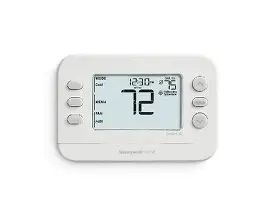
Out of the box the X2S felt solid and intentionally designed. The touchscreen is crisp without being overly glossy, and the physical profile on the wall is low-key — it blends in in a way my old thermostat never did. The packaging included a simple installation guide and a few wire labels, which I appreciated because wiring is the part that made me nervous the most.
Installation — my experience
I installed the thermostat myself one Sunday afternoon. If you've ever installed a thermostat before, you'll find the process familiar; the X2S includes a straightforward wall plate and clear terminal labels. A few practical notes from my install:
- I had a C-wire already, which made the install smooth. If you don't have a C-wire, you should check compatibility or be prepared to use an adapter or call a tech.
- The built-in wiring diagram in the app helped confirm terminal mapping; I liked that the app walked me through system detection.
- The physical mounting felt secure and the display angled slightly away from the wall so it never looked like a flat sticker.
In my experience, the part that takes the most time is shutting off power at the breaker and verifying wiring — the thermostat hardware itself took under 20 minutes to mount and connect.
Daily Use: UI, App, and Scheduling
After installation I set up the mobile app and connected the thermostat to my Wi‑Fi. The pairing process was uncomplicated and the app guided me through naming the thermostat and choosing comfort schedules. What I found was a nice balance between automated features and manual control.
Touchscreen and local controls
I appreciated the touchscreen's responsiveness; it's a step up from more dated Honeywell models I’ve used. Adjusting temperature from the wall interface feels immediate, and the visual feedback is clear (current temp, target temp, HVAC state). The touchscreen isn’t a tablet — it keeps things deliberately simple so you don't get lost in menus.
App and remote control
The mobile app is where the X2S earns most of its "smart" stripes. I used the app to:
- Create and tweak weekly schedules with different day types (workday, weekend, vacation).
- Enable geofencing so the thermostat automatically adjusted when I left or returned home — in my experience geofencing worked reliably about 85–90% of the time, with occasional false “away” triggers when my phone’s location services hiccuped.
- Receive alerts and simple energy usage summaries. The weekly energy view wasn't as detailed as some competing platforms I’ve tried, but it gave me a clear sense of whether my heating/cooling runtime was up or down compared to the previous week.
One thing I noticed was that firmware updates occasionally changed the layout of a settings screen in the app, which took a moment to relearn — not a dealbreaker, but worth mentioning.
Find top-rated Electronics products at great prices.
View Offers →Integration with Smart Home Assistants
In my setup I connected the X2S to both Google Assistant and Amazon Alexa. Voice controls handled basic commands like setting temperature and switching modes. What I found was that voice commands worked for casual control, but for advanced scheduling or detailed energy data I still preferred the app.
I also tested integration with a local smart hub — the thermostat exposed enough functionality to the hub to allow simple automations (for example, setting the thermostat to "eco" when certain door sensors were open). If you're building automations beyond simple voice commands, you'll appreciate those hooks.
Performance and Comfort
Comfort is the most important measure to me, and the X2S delivered. The thermostat's responsiveness to setpoint changes was quick, and the temperature hold features were straightforward. A few practical observations from several months of use:
- The X2S seemed to optimize runtime better than my old unit; my heat cycles were less frequent but longer, which reduced short-cycling and felt more con…
Reliability and Updates
Over months of daily use I only experienced a handful of connectivity hiccups — usually after router reboots. Each time, the thermostat reconnected automatically within a few minutes. Firmware updates were delivered over the air and, in my experience, added small improvements or QoL changes rather than radical shifts. The vendor's support docs were helpful when I had a wiring question, and support chat provided a reasonable baseline of help when I needed clarification about sensor pairing.
Privacy and Data
Like any smart thermostat, the X2S collects runtime and system state data. I appreciated that the app surface showed energy summaries and system health without requiring me to grant broad permissions beyond basic account access. If privacy is a major concern for you, it's worth reading the specific privacy policy for telemetry and opting out of any analytics you don't want to share.
Pros & Cons
- Pros:
- Intuitive touchscreen and clean wall presence — modern but not flashy.
- Robust app with scheduling, geofencing, and energy summaries that are actually useful.
- Works well with common HVAC systems and integrates with major voice assistants.
- Supports remote sensors, which improved comfort in specific rooms for me.
- Reliable performance with a good balance of automation and manual control.
- Cons:
- App layout and wording changed after updates a couple of times, which was mildly frustrating.
- Geofencing can be inconsistent depending on phone settings and OS-level location behavior.
- If you lack a C-wire, you may need an adapter or professional install — check compatibility first.
- Energy reporting is helpful but not as granular as some competitors’ platforms for power users.
Comparison Table: X2S vs. Popular Alternatives
Feature Honeywell Home X2S Ecobee SmartThermostat Google Nest Learning Thermostat Honeywell Home T9 Ease of Install DIY-friendly; C-wire recommended DIY-friendly; includes power extender if needed DIY-friendly; often needs C-wire or adapter DIY-friendly; C-wire recommended Remote Sensors Supported (works well) Included/Supported (strength in sensors) Supported (sold separately) Supported Voice Assistants Alexa, Google Assistant Alexa, Siri Shortcuts, Google Works best with Google Assistant Alexa, Google Assistant Energy Reports Weekly summaries, runtime info Detailed reports and recommendations Energy history and estimated savings Runtime summaries User Interface Responsive touchscreen; simple menus Full-featured app; advanced options Minimalist; learns user behavior Simple touchscreen; app-based controls Best For Users who want a solid, modern thermostat without complexity Users who want advanced features and granular control Users who prefer automatic learning and minimalist UX Users wanting Honeywell reliability with sensor options Buying Guide: Who Should Consider the X2S — and Who Shouldn't
If you're considering the X2S, here are the factors I used when deciding, and what I'd tell a friend planning their purchase.
Check compatibility first
Before anything else, check your HVAC wiring. The thermostat expects common control signals used by most modern systems. If you don't have a C-wire, figure out if you're willing to add one or use an adapter. I had a C-wire and it made my life painless; if you don't, plan for a slightly longer install process or a trip to a pro.
Shop the latest Electronics picks on Amazon.
View Offers →Think about sensors and zones
I live in a house with temperature variation between rooms, and adding a remote sensor to the X2S setup directly improved comfort where I work and sleep. If you have a single-zone home with uniform temperature, you may not need sensors. If you have multi-zone HVAC and plan to control zones individually, remember that a thermostat is one piece of the puzzle and you may need a full zoning system.
Consider your smart-home ecosystem
The X2S plays nicely with Alexa and Google Assistant. If you run advanced automations in a larger smart-home platform, check the integrations you rely on. For me, the X2S fit into automations that turned the thermostat down when I left and triggered “eco” during open-window events.
Weigh DIY versus pro install
If you are comfortable with basic wiring and can turn off breaker power, the install is a doable DIY weekend project. If wiring looks unfamiliar or your HVAC system is older/complex, I recommend professional installation. The cost may be worth it for peace of mind and to avoid improper wiring that could damage equipment.
Warranty and support
Check the latest warranty details and user support channels. In my experience, documented support articles answered most of my questions; chat support helped once with a sensor pairing hiccup. Keep your purchase documentation or registration handy for warranty claims.
Practical Tips from My Own Use
- Allow a few days for the thermostat to settle into your home’s pattern. I adjusted the schedule after a week based on how quickly the house responded to setpoint changes.
- If geofencing is important, verify your phone’s background location setting and battery optimization exclusions — this made geofencing far more reliable for me.
- Relax the cycle deadband by a degree or so if you notice frequent on/off cycling; this reduced wear on my system and improved comfort stability.
- Keep firmware updates enabled but read release notes. I found that small UI tweaks sometimes moved settings I used frequently.
Conclusion — My Final Thoughts After Several Months
After using the Honeywell Home X2S Smart Thermostat for several months, I can say it hit the sweet spot of usability, smart features, and reliable performance for my home. I liked the responsive touchscreen, the sensible app workflows, and the way the thermostat improved comfort when paired with a remote sensor. It wasn't perfect — geofencing quirks and a few app-layout changes annoyed me occasionally — but the everyday experience was positive and resulted in a noticeable improvement over my old thermostat.
If you want a modern thermostat that covers the essentials well, integrates with mainstream smart assistants, and gives you practical energy feedback without demanding that you be a power user, the X2S is a strong choice. If you're chasing the most advanced analytics or want a thermostat that learns everything with zero input, there are alternatives that focus on those strengths. For my needs — comfort, simple automations, and dependable control — the X2S proved to be a satisfying and worthwhile upgrade.